
- Home
- Social network
- Things to do
-


When selfies go wrong: don’t smash, break or damage artworks!
An Italian student smashed a Greek sculpture at Milan’s Academy of Fine Arts of Brera after he hopped on its lap in order to capture that perfect selfie.
- Travel routes
- Fellow travelers
-
In Oaxaca, Mexico, you can’t celebrate the holidays without radishes!
Every year on December 23, the Mexican state of Oaxaca presents the most impressive display of carved vegetables in the world.
- Stories
All content and media files are published under a Creative Commons Attribution-ShareAlike 4.0 International License (CC BY-SA 4.0)

Saint-Georges-de-Boscherville Abbey
Rouen and surrounding
Temples, Churches, Squares, Parks, Gardens
Address: 12 Route de l’Abbaye
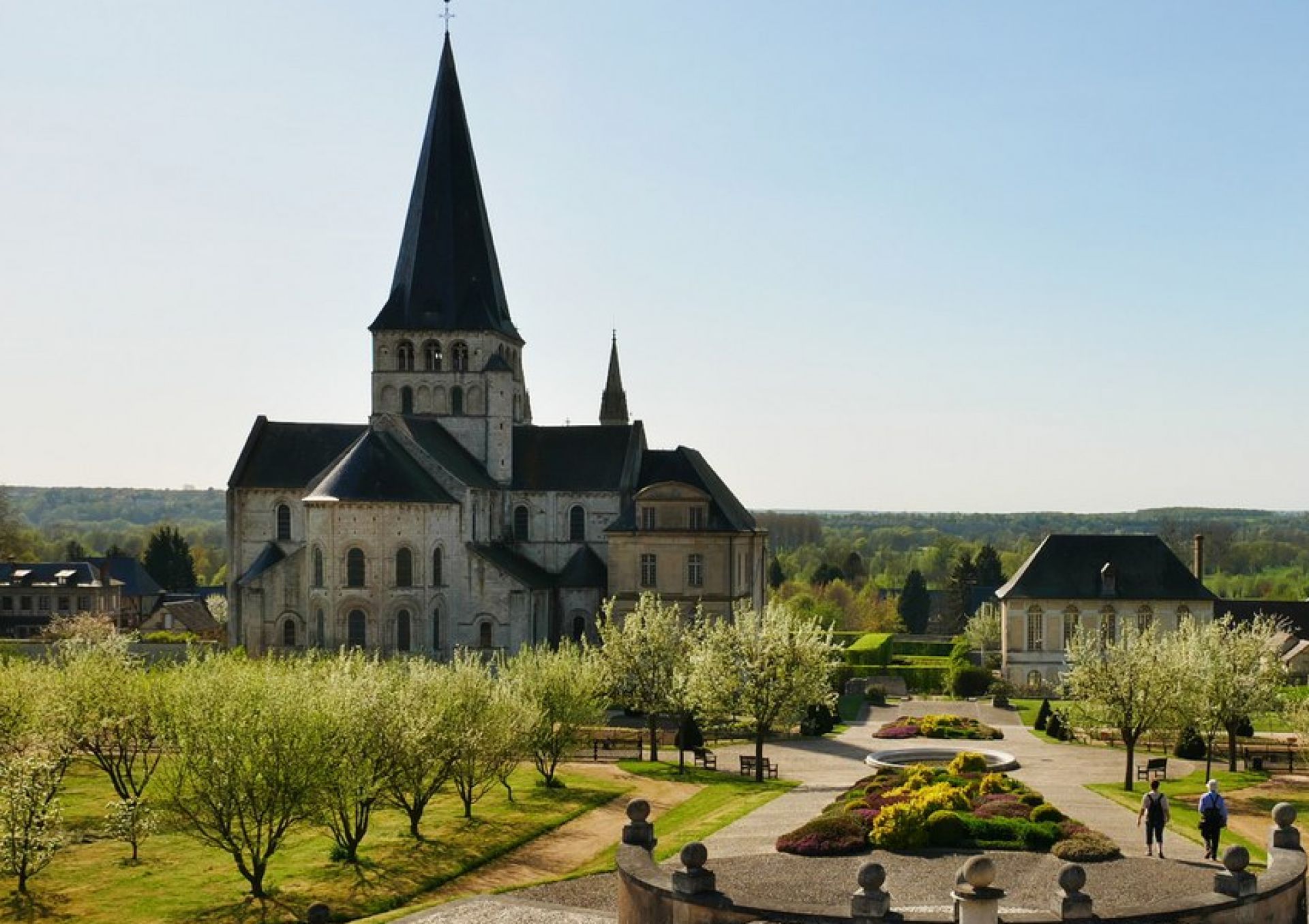
The English King William the Conqueror was indirectly involved in the creation of the Abbey of Saint-Georges-de-Boscherville in the village of Saint-Martin, 12 kilometers from Paris. At the end of the 11th century, the quite pious personal treasurer of the king, Sir Raoul de Tancarville, founded the abbey and then settled there with his family. It is hard to say how news spread in ancient times without modern means of communication, but the rumor of a new abbey in a quiet secluded place on the banks of the Seine in Normandy grew all over Europe.
In 1113, the first monks from different countries arrived. At the same time, the construction of the abbey church began. Tourists can still see this model of the Norman-Romanesque architectural style, the main distinguishing feature of which is the large square tower at the joint of the nave and transept. On the plan, the church has the shape of a traditional Latin cross. Its high windows and a roof lantern provide additional lighting. There are no columns, but the vault is supported by arches, the heads of which are painted with homiletic Old Testament scenes: lions devour a sinner, priests blow the trumpets in Jericho, dying Moses with the Tablets of Stone commands the Jews to obey Joshua.
Monastic life was peaceful and harmonious until the era of religious wars between Protestants and Catholics, as a result of which the abbey was seriously damaged. In the 17th century, a large-scale restoration of the church and the garden began. Today, the abbey includes buildings of the 12th, 13th (the functioning Chamberlain's Chapel), and 17th centuries. Also, the monastery is surrounded by the 4-hectare garden, which was organized in the then-popular French style. It has several levels that gradually descend to the Seine. Its alleys converge symmetrically to the central axis, trees and bushes are figuratively trimmed. Besides, it is divided into 4 sectors: a pharmacy garden with medicinal herbs, a garden with fruit trees, a flower garden, and a green maze. The garden has this appearance thanks to the reconstruction in accordance with the old drawings and engravings of 1680, which was carried out over the past ten years. By the way, don`t forget to see a large model, which shows the medieval life of the abbey in detail.
