All content and media files are published under a Creative Commons Attribution-ShareAlike 4.0 International License (CC BY-SA 4.0)

Het Steen in Antwerp
Antwerp and surrounding
Architecture, Castles, Fortresses, Towers, Museums, Galleries, Exhibitions
Address: Steenplein 1
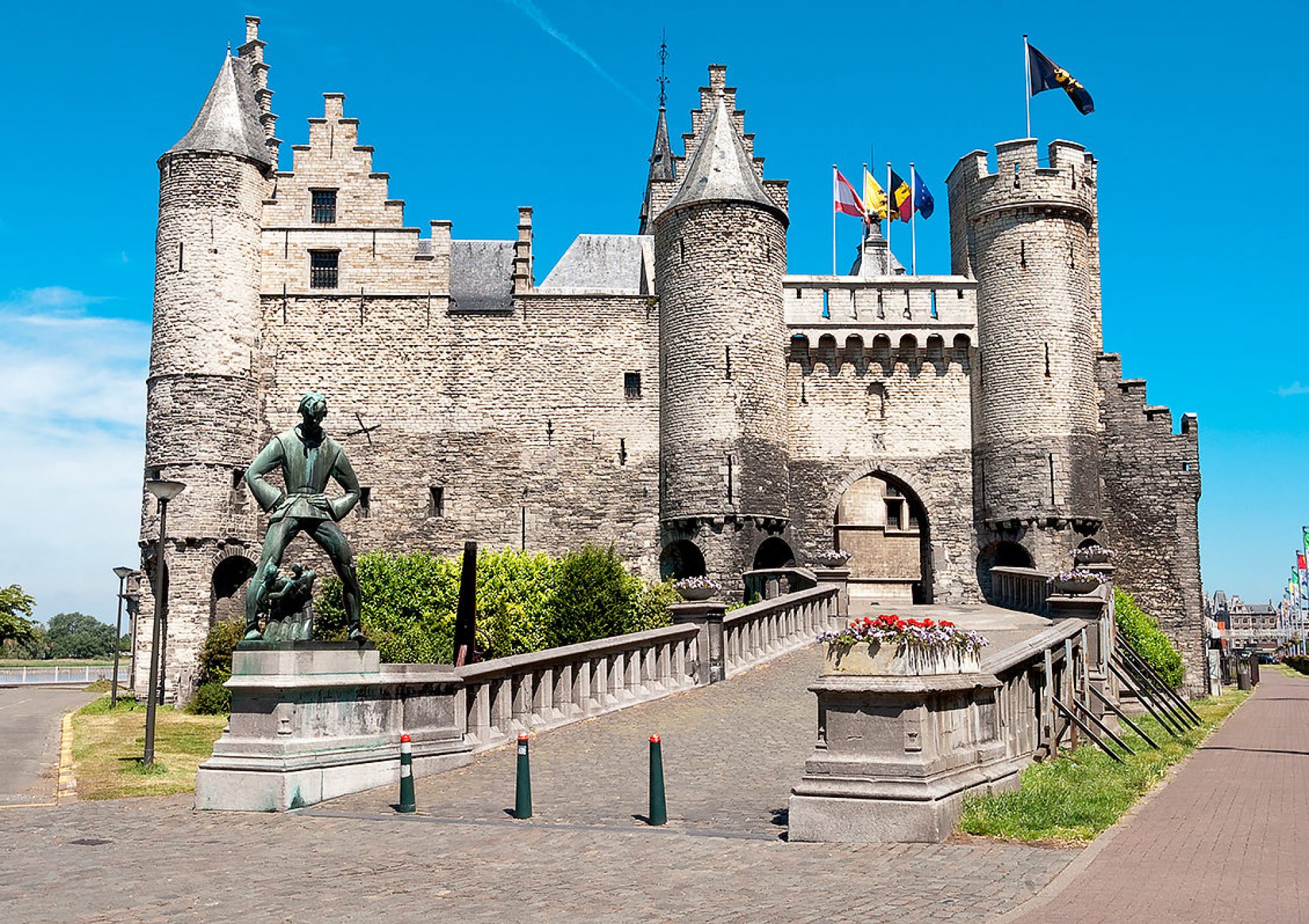
Het Steen (the Stone Castle), located on the right bank of the River Scheldt near the historic center of Antwerp, is closely linked to the city's foundation. It is the oldest building in the area and the last known evidence of the fortress wall that was responsible for the appearance of the Belgian seaport for centuries.
The first settlement appeared in the vicinity of the castle in the 9th century. Locals built earthen walls around their homes to protect themselves from Vikings, pirates, and other outside-world threats, as well as to take control of the riverbank. It laid the foundation of the iconic landmark, which became the main bulwark of security and tranquility in the Middle Ages.
At the turn of the 12th and 13th centuries, the primitive earthen walls were replaced by the more solid and majestic stone castle, later called Het Steen. The building got its current appearance in the 16th century during the reign of the Holy Roman Emperor Charles V. Traces of that ancient restoration can still be seen on the facade of the building. Just compare the white stone that appeared due to the modifications and the gray one, a reminder of the original look of the castle.
From the beginning of the 14th century to the first half of the 19th century, the impregnable castle was used as a city prison, like many similar structures in Europe. Later, the castle was occupied by a sawmill, a fish shop, and other city establishments. In 1862, it became the museum of antiquities and archeology. Around the same time, most of the castle was demolished to stop the shallowing of the Scheldt River.
Almost a century later, in 1952, the first exhibition space was replaced by the National Maritime Museum (Nationaal Scheepvaartmuseum). It had occupied the castle until it moved to the MAS (Museum Aan de Stroom dedicated to the city's heritage) in 2008. Since 2012, Het Steen has housed a youth educational center and a theater, used for various creative workshops, events, and performances.
